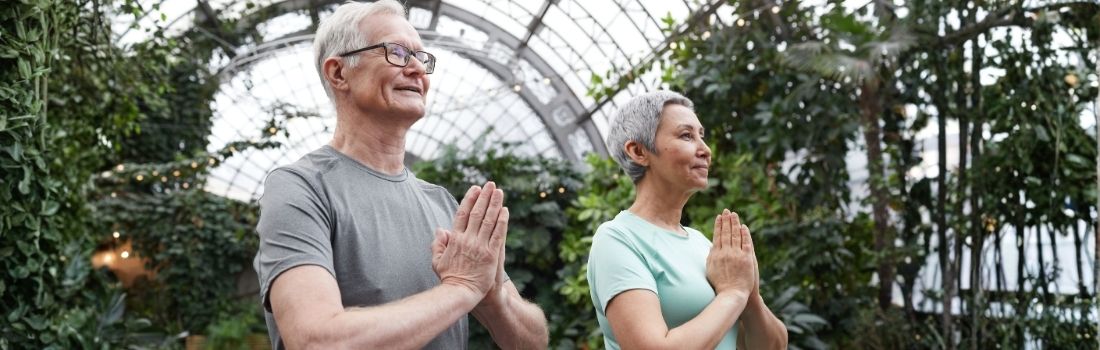
Drawing from my background in behavioral healthcare and years of teaching Shaolin Kung Fu and Tai Chi, we'll explore how physical habits, mental habits, and self-compassion work together to support sustainable well-being. We'll examine common patterns such as self-criticism, rumination, and all-or-nothing thinking—not to judge them, but to better understand them and practice more flexible alternatives.
Most of us already know what we're "supposed" to do to be healthier. We know we should exercise more, sleep better, eat well, manage stress, and stop being so hard on ourselves. Yet despite having more information than ever before, many of us still struggle to build lasting habits. Why?
This class explores the idea that wellness isn't something we achieve through perfection—it's something we practice. Together, we'll examine not only our physical habits, but also the mental habits that quietly shape our everyday lives. Habits like perfectionism, rumination, harsh self-criticism, and the belief that one setback means we've failed. Rather than treating these patterns as personal flaws, we'll explore them with curiosity and learn practical ways to respond differently.
Drawing from my background as both a behavioral health professional and a Shaolin Kung Fu and Tai Chi instructor, this course combines modern understanding of behavior change with lessons I've learned through years of teaching movement, mindfulness, and sustainable practice. While inspired by Eastern philosophy, this is not a philosophy lecture. Instead, we'll focus on practical skills that participants can immediately begin applying to everyday life.
This will be a highly interactive workshop built around discussion, guided reflection, simple movement exercises, and practical habit-building activities. Together we'll explore why traditional wellness advice often fails, how to build routines that fit our individual lives, and why learning to "begin again" may be one of the most important wellness skills we can develop.
Participants will leave the class with more than motivation. They'll leave with a personalized wellness practice, a deeper understanding of the mental habits that support long-term well-being, and practical strategies for responding to setbacks with flexibility rather than self-judgment.
Throughout my fourteen years working in behavioral healthcare, I found that lasting growth rarely came from trying harder. It came from helping people better understand themselves and creating environments where change felt possible. Teaching Shaolin Kung Fu and Tai Chi reinforced the same lesson: mastery isn't built through perfection—it's built through consistent practice and a willingness to return after every setback. My goal is to create a learning experience where participants feel supported, challenged, and empowered to build a version of wellness that is sustainable, personal, and compassionate.