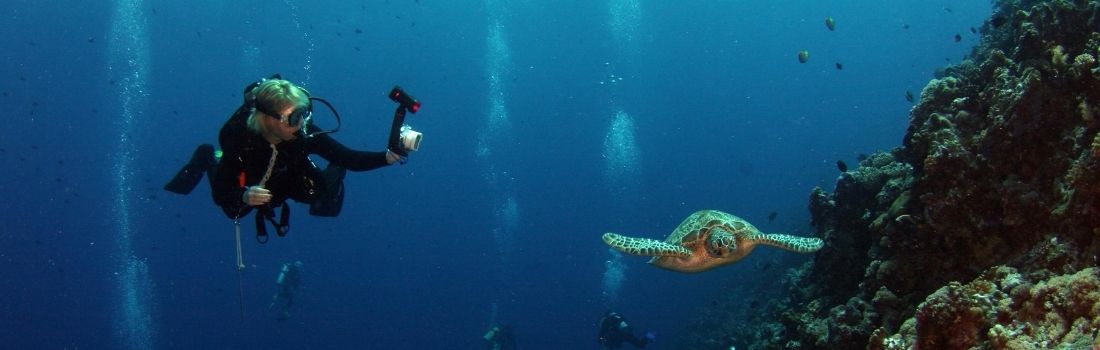
This course explores the fundamental principles that shape life on Earth through the lenses of ecology, evolutionary biology, and biological diversity. Students will examine i) how organisms interact with each other and their environments, ii) how evolutionary processes generate and maintain the variety of life, and iii) how biodiversity influences the stability and function of ecosystems. Emphasis is placed on ecological relationships, natural selection, speciation, adaptations, and the patterns and drivers of global biodiversity. Through case studies, discussions, and scientific inquiry, the course highlights both the complexity of living systems and the challenges they face in a rapidly changing world.
By the end of the course, you will have a better understanding of the variable adaptations that marine life has to environmental conditions and disturbance regimes.
Prof. Artemis Reed, PhD Marine Ecology | Evolutionary Biology | Diversity
An expert in coral resilience and evolutionary mechanics, Prof. Reed joins with a background in high-level research from the Australian Research Council Centre of Excellence in Coral Reef Studies at James Cook University. Her work focuses on the "Scleractinian Phoenix"—the capacity for marine life to regenerate and adapt in the face of climate instability. Prof. Reed’s classes offer a deep dive into the paradoxes of nature, teaching students how to apply proportional variation analysis and critical thinking to the urgent questions of biodiversity and ecological survival.